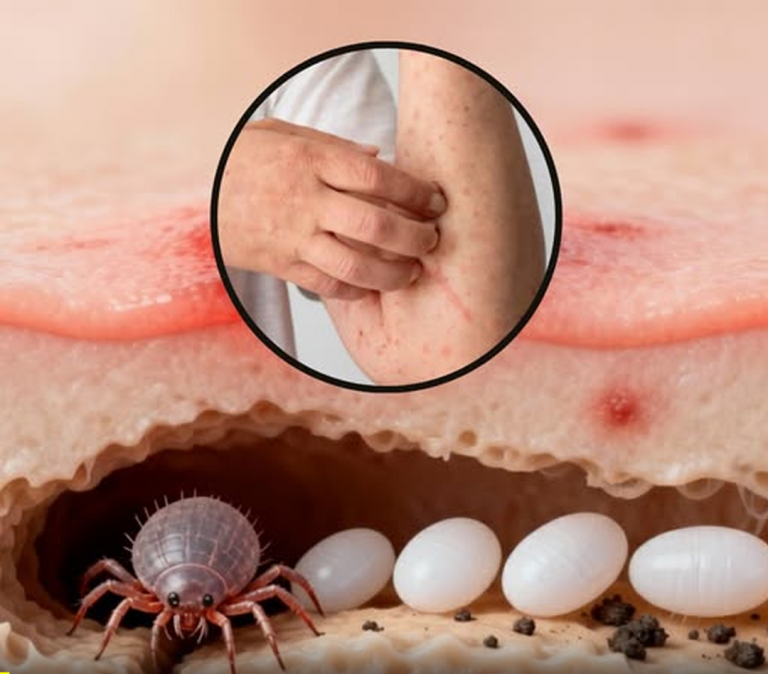
Recognizing the difference between an allergy and scabies may seem simple, but in practice it isn’t always. Both can cause significant skin discomfort, itching, and disrupt daily life, but their causes and treatments are completely different. Clearly understanding each condition is essential for taking appropriate action and avoiding complications.
Scabies , the medical name for mange, remains more common than many realize. Despite the common belief that it’s caused by poor hygiene, the reality is that it can affect anyone, regardless of their hygiene routine or lifestyle. The reason is simple: it’s not caused by dirt, but by the presence of a microscopic mite called Sarcoptes scabiei , an organism belonging to the arachnid group that lives on the skin’s surface.
One of the most typical symptoms of this condition is intense itching , especially at night. Many patients describe that, as night falls, the
The discomfort becomes more pronounced and harder to tolerate. This can be related to factors such as the natural increase in body heat, the warm environment of the bed, or the absence of external distractions, which makes the brain perceive the itching more clearly. Prolonged rest also contributes to the sensations on the skin being felt more intensely.
The behavior of the female mite is key to understanding this reaction: when she comes into contact with human skin, she burrows small tunnels in the outermost layer. As she burrows, she leaves behind eggs and debris , which are responsible for triggering the immune system’s response. It is this defensive reaction that causes the characteristic itching, not the mite’s movement itself.
Scabies is primarily transmitted through direct and prolonged contact with an infected person. Everyday activities such as sleeping in the same bed, frequent hugging, or sharing enclosed spaces for extended periods can facilitate transmission. Although less common, it can also be acquired by using clothing, towels, or bedding that has been in contact with affected skin.
