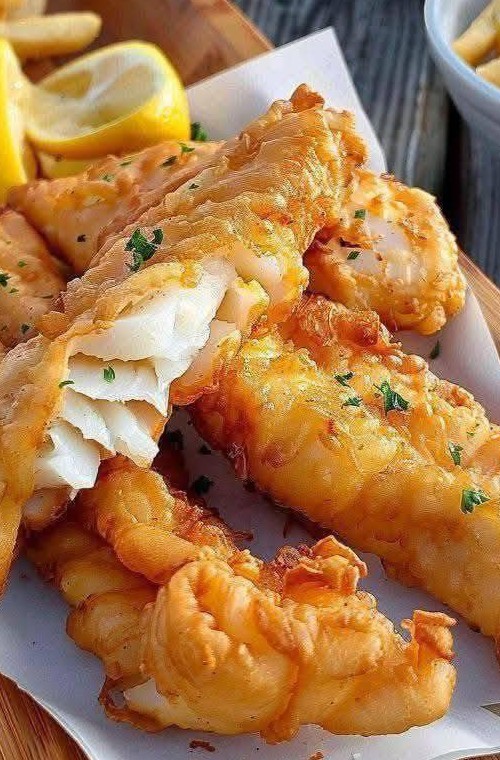
There is something deeply satisfying about a plate of golden, crispy fish fry — the contrast between an unmistakably crunchy exterior and a moist, flaky interior delivers comfort and nostalgia in every bite. This recipe transforms simple white fish fillets into a restaurant-style fry using a light, effervescent batter made with cold soda water (or beer as an optional swap) and a starch-forward coating that browns evenly without becoming greasy. It’s a quick, reliable method that performs well for weeknight dinners, casual gatherings, or when you want to elevate fish and chips at home.
This version has been tested for consistent crispness and straightforward technique and is crafted in the spirit of practical, tested recipes you might find on tinsuf — approachable, robust, and designed to please the whole family.
Cuisine: International / Classic
Category: Main course
Keywords: fish fry, crispy fish, beer-battered, soda-batter, seafood
Prep Time: 15 minutes
ADVERTISEMENT
Cook Time: 15 minutes (in batches)
Total Time: 30 minutes
Yield: 4 servings
Ingredients
Fish
500 g (about 1 lb) white fish fillets (cod, haddock, or basa), skin removed
Salt, to taste
Freshly ground black pepper, to taste
Lemon wedges, for serving
Fresh parsley, chopped, for garnish (optional)
Batter
1 cup (125 g) all-purpose flour
1/2 cup (60 g) cornstarch (or rice flour for extra crispness)
1 teaspoon baking powder
1 teaspoon garlic powder
1 teaspoon paprika (smoked or sweet, optional)
1/2 teaspoon fine salt
1/2 teaspoon freshly ground black pepper
1 cup (240 ml) very cold soda water or cold sparkling water (substitute: cold beer for a beer batter)
For Frying
Vegetable oil or canola oil, for deep frying (enough to reach 3–4 cm / 1–1.5 in in a deep pan)
Extra flour for dusting (about 1/4 cup)
Instructions
Prepare the fish: Pat the fillets dry with paper towels and cut them into even pieces (roughly 2–3 cm / 1 in thick pieces or portions sized to your preference). Season lightly on both sides with salt and pepper. Let rest while you prepare the batter.
Make the dry mix: In a medium bowl whisk together the all-purpose flour, cornstarch, baking powder, garlic powder, paprika, salt, and pepper until uniform.
Chill and combine: Place the dry mix in a larger mixing bowl and pour in the very cold soda water while whisking gently to combine. Stir just until smooth; a few small lumps are fine. Do not overmix — the batter should be slightly thick but still pourable, similar to pancake batter.
Heat the oil: In a deep, heavy-bottomed pan or fryer, heat oil to 180°C (350°F). Use a thermometer for accuracy; maintaining temperature is key to crisp, non-greasy results.
Dust the fish: Lightly dust each piece of fish in extra flour (this helps the batter adhere) and gently shake off excess.
Batter and fry: Dip each floured piece into the batter, letting any excess drip off, then carefully lower into the hot oil. Fry in small batches — do not overcrowd the pan. Fry for 4–6 minutes per batch, turning once halfway through, until the coating is deep golden and the fish is opaque and flakes easily with a fork.
Drain and season: Transfer fried fish to a wire rack set over a sheet pan or to a paper towel–lined plate to drain briefly. Sprinkle immediately with a light pinch of salt to enhance flavor.
Serve: Serve hot with lemon wedges, chopped parsley for garnish, and your choice of sides such as fries, coleslaw, or a simple green salad.
How This Is Made (Practical Notes)
The combination of flour and cornstarch (or rice flour) creates a crystalline texture in the crust: the flour forms structure while the starch inhibits gluten development and yields a lighter, crisper finish. Very cold liquid — soda water or beer — traps tiny bubbles that expand in the hot oil, puffing the batter and creating an airy crust. Keeping oil temperature around 180°C (350°F) prevents excessive oil absorption and ensures rapid browning.
Variations & Substitutions
Add 1/4 teaspoon cayenne or chili flakes to the dry mix for a spicy edge.
Substitute beer (lager or pale ale) for soda water for a classic beer batter flavor.
For gluten-free: use a blend of rice flour and tapioca starch (1:1) in place of all-purpose flour and cornstarch.
To bake instead of fry: place battered pieces on a parchment-lined tray, spray lightly with oil, and bake at 220°C (425°F) until golden and crisp, turning once — results will be crisp but not as light as deep-fried.
Troubleshooting & Consistency Tips
If the coating becomes soggy: the oil was likely too cool — let it return to 180°C (350°F) before frying the next batch. Avoid stacking fried pieces on paper towels; a wire rack preserves airflow and keeps the underside crisp. If the batter slides off the fish, ensure you lightly dust pieces with flour first and that the batter is not overly thin; a slightly thicker, clingy batter adheres better. If the crust browns too quickly while the fish remains undercooked, lower the temperature slightly and fry in smaller pieces so the interior cooks through.
ADVERTISEMENT
Storage & Make-Ahead
Best eaten immediately. To keep crispness when serving a larger group, fry in batches and keep cooked fish on a wire rack in a preheated oven at 90°C (200°F) until ready to serve. Refrigerate leftovers in an airtight container for up to 2 days. Reheat in a 200°C (400°F) oven for 8–10 minutes on a wire rack to refresh the crust; microwaving will soften the coating.
Why This Recipe Works
The structural balance between flour and cornstarch plus the use of cold carbonated liquid delivers a batter that crisps quickly and stays light rather than turning dense. Dusting fish with flour first gives the batter something to cling to, and maintaining consistent oil temperature minimizes oil absorption. These simple, purposeful steps combine to produce reliably crisp, tender fried fish every time.
Expert Tips
Keep the batter bowl in an ice bath while frying to ensure it stays cold between batches.
Use a deep thermometer and monitor oil temperature rather than relying on visual cues alone.
Taste and season sparingly — a light finishing salt right after frying enhances flavor without overpowering the fish.
For the crispiest results, use a neutral oil with a high smoke point and refresh oil between very large batches if it becomes dark or foamy.
This Crispy Fish Fry recipe is provided with care and practical testing in the style of tinsuf — straightforward, dependable, and built for real kitchens. Try it with your favorite white fish and feel free to adapt the batter to your taste.
