Hip Pain: What Does It Mean? Common Causes & When to Seek Help
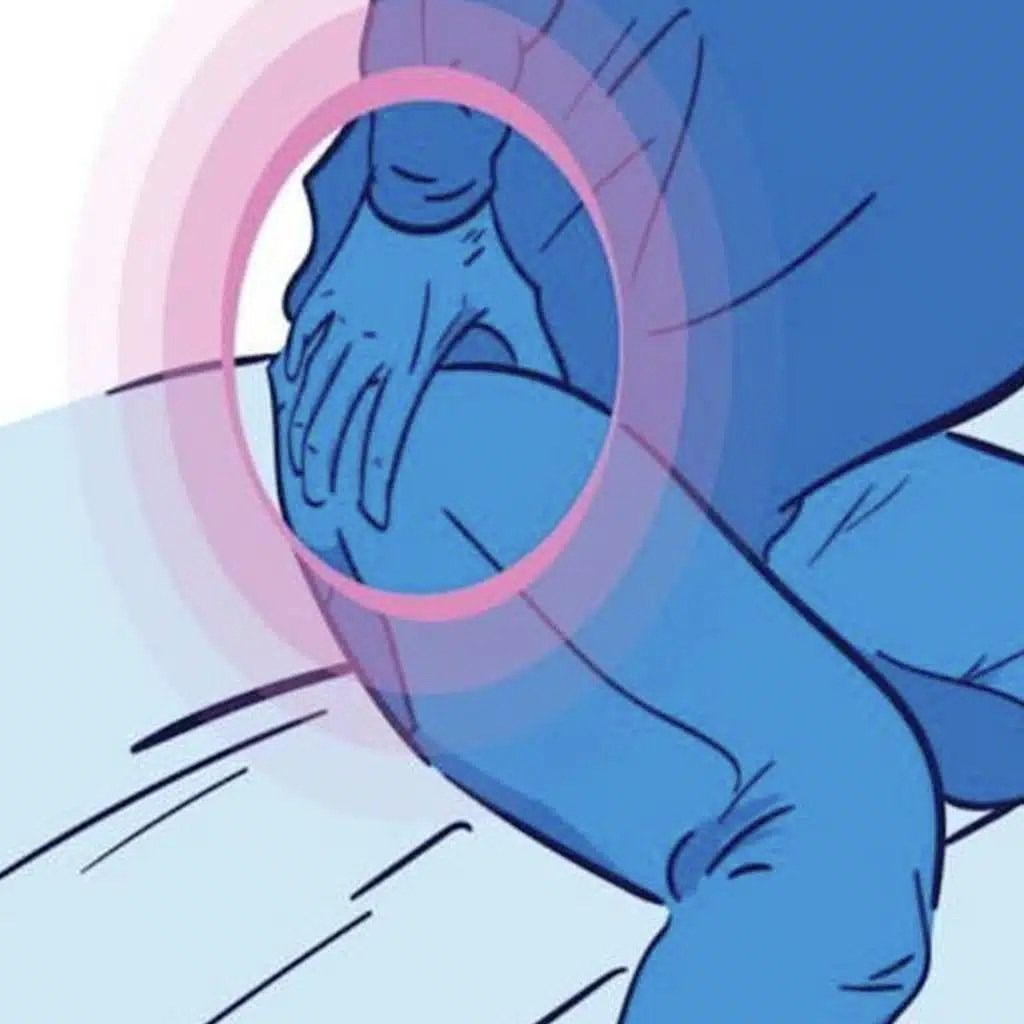
The image above captures a sensation millions of people experience daily: a sharp, radiating ache centered on the hip joint. Because the hip is one of the body’s largest and most complex weight-bearing joints, pain in this area can be incredibly disruptive, affecting everything from your morning walk to your ability to get a good night’s sleep.
In this article, we will break down what that “red circle” of pain might represent, the common culprits behind hip discomfort, and how to know when it’s time to see a specialist.
1. Locating the Source: Where Does It Hurt?
Before diagnosing the “why,” doctors look at the “where.” The location of your pain provides a massive clue regarding the underlying cause:
Pain on the Inside (Groin): If you feel the pain deep in your groin or the front of your hip, the issue is likely within the hip joint itself.
Pain on the Outside (Lateral): As shown in the illustration, pain felt on the outer hip, upper thigh, or outer buttock is usually related to soft tissues (muscles, ligaments, or tendons) surrounding the joint.
Pain in the Buttock/Lower Back: This often indicates an issue with the spine or the sacroiliac (SI) joints, rather than the hip itself.
2. Common Causes of Hip Pain
Osteoarthritis (The “Wear and Tear” Factor)
Osteoarthritis is the leading cause of hip pain, especially in adults over 50. It occurs when the protective cartilage that cushions the hip bones begins to wear away. This leads to bone-on-bone friction, causing inflammation, stiffness, and a dull, aching pain that worsens after activity.
Bursitis (The “Target” Pain)
If you feel a sharp pain specifically when pressing on the outside of your hip or when lying on your side at night (similar to the focal point in the image), you may have Trochanteric Bursitis. This is the inflammation of the fluid-filled sacs (bursae) that prevent friction between tissues. It is a very common cause of lateral hip pain.
Tendonitis and Muscle Strain
Repeated activity or a sudden increase in exercise intensity can lead to tendonitis—inflammation of the tendons connecting muscles to the hip bone. “Snapping hip syndrome” is a common variation of this, where you feel a snapping sensation or hear a pop during movement.
Hip Labral Tear
The labrum is a ring of cartilage that follows the outside rim of your hip joint socket. It acts like a rubber seal or gasket to help hold the ball at the top of your thighbone securely. Athletes and people with structural hip issues are prone to tearing this, resulting in a clicking sensation and pain in the groin.
Sciatica and Pinched Nerves
Sometimes, the hip is a “victim” of the back. A herniated disc in the lower spine can compress the sciatic nerve, sending “electric” shocks or burning pain through the hip and down the leg.
3. When Should You Seek Medical Help?
Minor hip pain often resolves with rest, but you should consult a healthcare provider if you experience:
Inability to Bear Weight: If you cannot stand or walk without intense pain.
Sudden Swelling or Deformity: Signs of a possible fracture or dislocation.
Night Pain: Pain that prevents you from sleeping or wakes you up.
Fever or Redness: These can be signs of a joint infection (septic arthritis), which is a medical emergency.
Loss of Range of Motion: If you find it impossible to rotate your leg or bend at the waist.
4. Relief and Treatment Strategies
At-Home Care (The R.I.C.E. Method)
For mild strains or bursitis, start with Rest, Ice, Compression, and Elevation. Over-the-counter anti-inflammatories can also help manage swelling.
Physical Therapy
This is often the “gold standard” for non-surgical recovery. A therapist can help you strengthen the gluteal muscles and core, taking the pressure off the hip joint and improving your gait.
Injections and Advanced Care
If conservative treatments fail, doctors may suggest corticosteroid injections to “reset” the inflammation or hyaluronic acid injections to lubricate the joint. In severe cases of arthritis, a Total Hip Replacement may be recommended to restore quality of life.
Conclusion
Hip pain is a signal from your body that something is out of balance. Whether it’s a temporary strain or a chronic condition like arthritis, early intervention is key to preventing long-term mobility issues.
